My Story
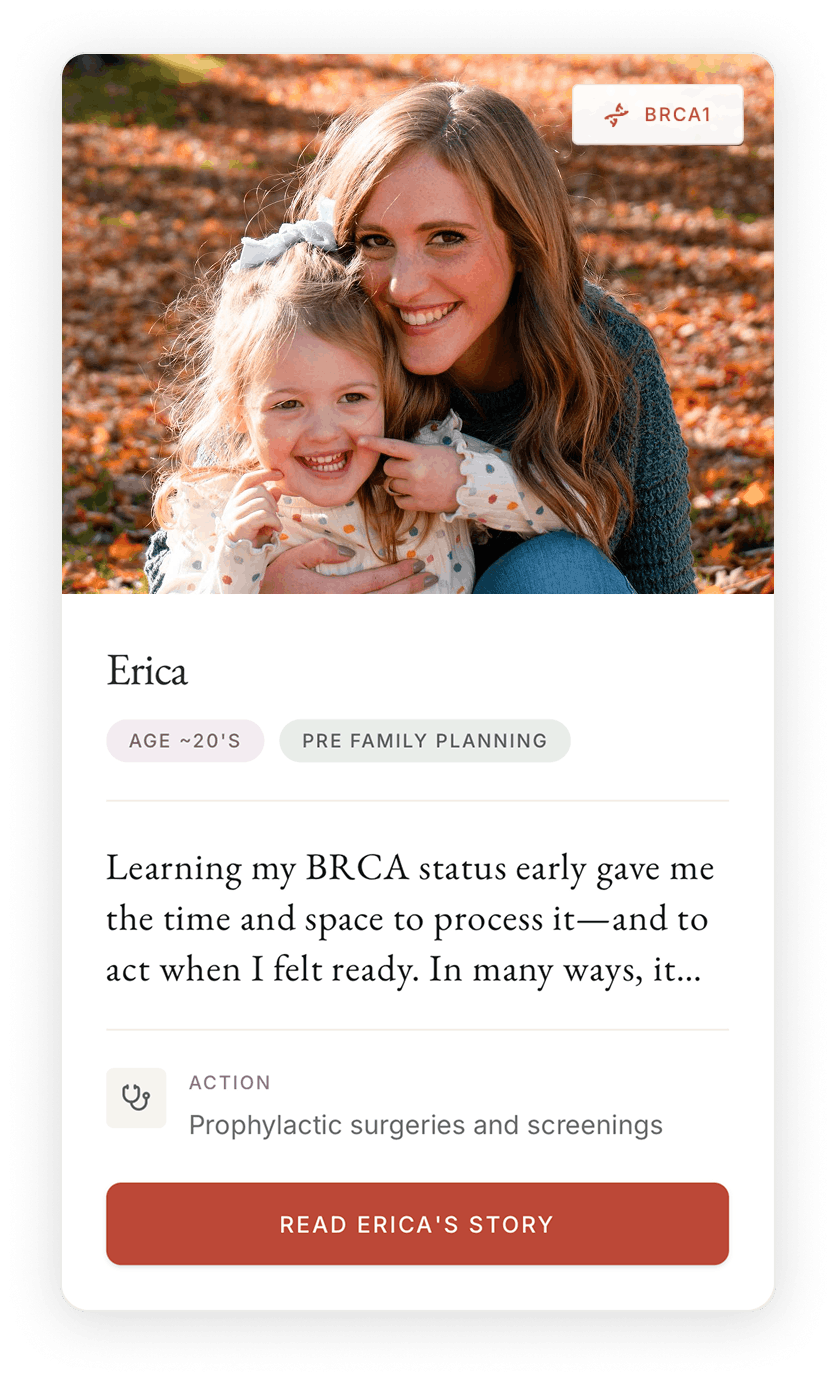
When I found out I was BRCA-positive, I quickly realized that the decisions weren't just about what to do—they were about when. Timing mattered as much as the actions themselves. I saw so many women diagnosed after pregnancy, and that reality shaped how I thought about my own path. I made choices earlier, before having kids, because that's what felt right for me.
How I Felt When I Found Out
At first, everything felt overwhelming. There was a lot of information, a lot of noise, and not a lot of clarity. I didn't feel panicked—I felt flooded. What I needed wasn't more text or more forums. I needed reassurance that life could still feel normal.
How I Thought About Risk
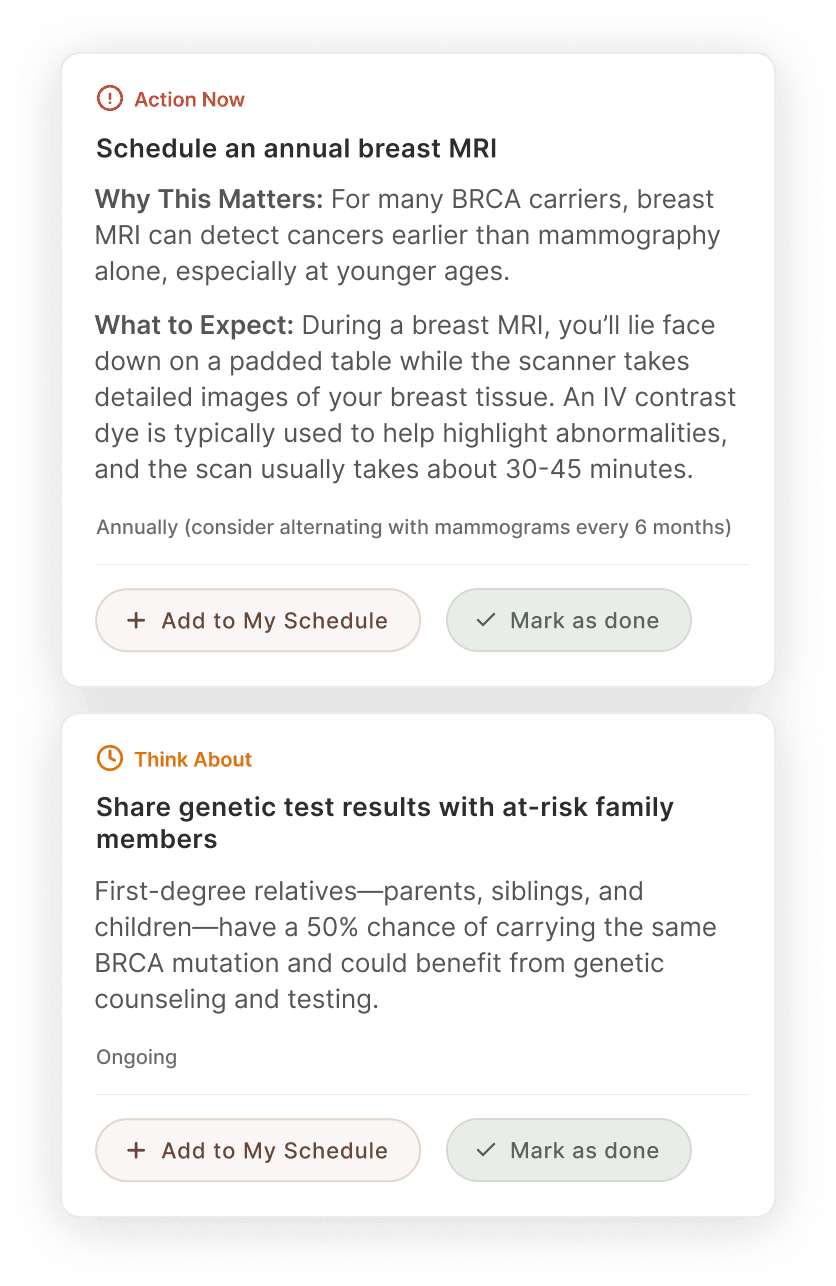
Risk, for me, wasn't just a statistic. It was about windows of time. When should surveillance increase? When should I start talking to surgeons? What decisions made sense before kids versus after?
I wanted guidance that respected those phases—not pressure to act immediately, but clarity about when action might matter most.
The Decisions I Faced
I had to figure out how to plan without a clear roadmap. When to start interviewing surgeons. How to think about reconstruction. How to make sense of conflicting advice. And how to do all of that without losing myself in fear.
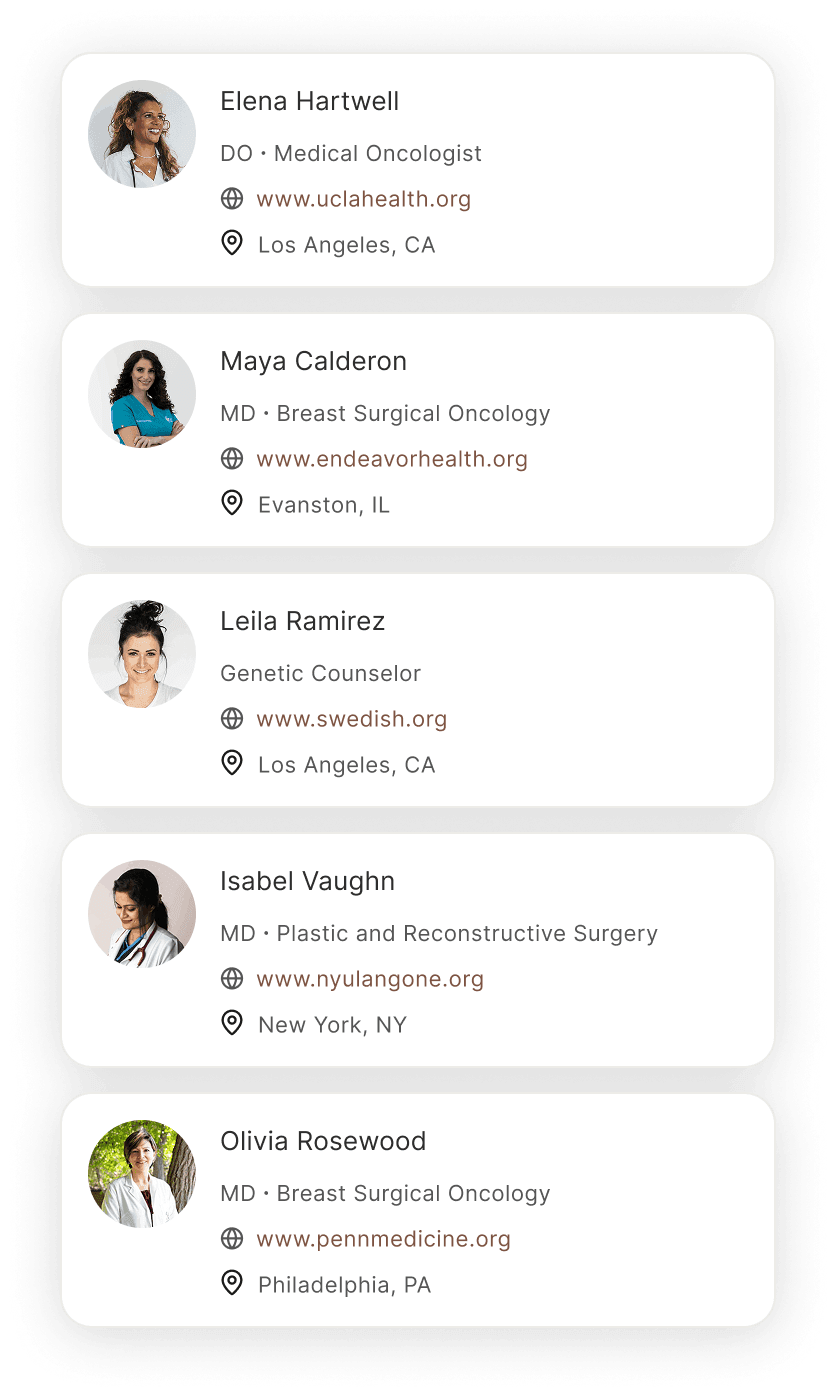
One of the hardest parts was finding the right specialists—especially around reconstruction. I struggled to find honest, patient-centered perspectives, and at one point felt devastated when a surgeon pushed options that didn't align with what I wanted for my body.
What I Chose—and Why
I chose to focus on timing and preparation. I wanted to feel empowered, not rushed. I paid attention to patterns I saw in other women's stories and made decisions that fit my life—not someone else's timeline. What mattered most was feeling informed, supported, and confident that the choices were mine.
What Treatment and Recovery Were Really Like
What surprised me most was how emotional the process could be—not just physically, but mentally. Feeling seen and heard by the right doctors made an enormous difference. So did hearing from other women who were living full, active, normal lives on the other side of these decisions.
That perspective helped ground me when things felt heavy.
Where I Am Now
Today, I focus on living my life—working, moving my body, planning for the future. Ongoing monitoring is part of that, but it no longer defines me. The fear has quieted, replaced by a sense of steadiness and trust in the path I chose.
What I'd Do the Same or Differently
I would still prioritize timing and intentionality. I don't believe in one-size-fits-all decisions. If anything, I would have wanted clearer guidance earlier—especially around reconstruction options—and reassurance that it was okay to take time to decide.
What I Wish I'd Had
I wish I'd had:
- A suggested window for key decisions
- Curated peer stories from women who looked like me and lived like me
- A visual, approachable way to understand options
- Better tools to find the right reconstruction specialists
Most of all, I wish I'd had fewer forums—and more clarity.
What I Want You to Know
You don't have to do everything at once. You don't have to read everything. And you don't have to follow someone else's timeline.
Seeing women living full, normal lives helped me trust that I could too. With the right information, the right support, and the right timing, this doesn't have to be the thing that defines you.
This is one member’s personal experience, not medical advice. Talk with your care team about your own situation.