My Story
My story really starts before my own diagnosis—with my mom. She's a survivor. She was diagnosed with breast cancer at 47, and she was uninsured at the time. She's been in remission for about thirteen years now, but she was never offered genetic testing—not then, and not even later, once we started learning more about it.
After her diagnosis, my sister and I were simply told that we were at higher risk, that we should do self-exams, and that we'd start mammograms at 37. That was it. No one ever sat us down and explained what being high-risk actually meant. Nobody told us that women of color are typically diagnosed with more aggressive types of cancers and at younger ages.
How I Felt When I Found Out
In March of 2020, at the height of COVID, I found a lump by complete accident. I was 31 years old. Multiple health care professionals said, "You're so young, it's probably nothing"—right up until the mammogram, ultrasound, and biopsy came back: stage 2B, triple negative.
I didn't even know what that meant. I had no idea there were different kinds of breast cancer. All I knew was that I had it. Genetic testing revealed I carry the BRCA1 mutation, increasing my risk of ovarian cancer. It was so overwhelming that I compartmentalized everything I was feeling and just focused on the breast cancer in front of me.
How I Thought About Risk
I'd been told I was high-risk, but no one had ever explained what that really meant, so it stayed abstract. I thought I was doing all the right things—I was an avid CrossFitter, I'd run nine half marathons, I followed a plant-based diet, and I was in the best shape of my life. In my mind, I was taking care of my body because I knew I was at risk. But I never performed self-exams. It wasn't until I found that lump that risk stopped being an idea and became real.
Around the same time, I realized my mom should have been tested years earlier. I encouraged her to speak with her oncologist. She tested BRCA1 positive; my sister tested negative.
The Decisions I Faced
Suddenly I was facing so much at once—a triple-negative breast cancer diagnosis, an aggressive treatment plan, and the knowledge that I carried a mutation that raised my risk of another cancer. I was navigating most of it alone, in the middle of a pandemic, without anyone to help me make sense of what was coming or what my options actually were. I smiled on the outside and told everyone I was "fine," but on the inside I was scared.
What I Chose—and Why
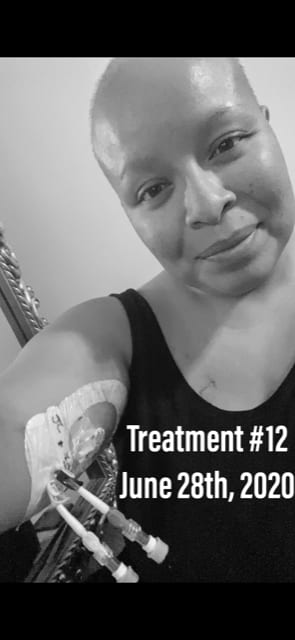
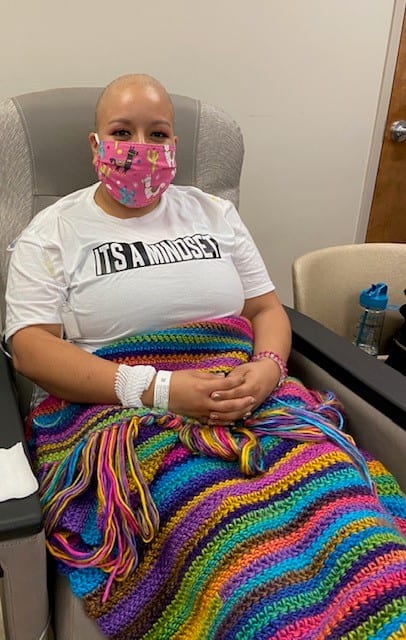
I went through sixteen rounds of treatment. After that, I had a bilateral mastectomy with DIEP flap reconstruction in October of 2020. Then, in July of 2021, I chose to have a full hysterectomy.
My doctor told me I could wait until I was 35 or 36, but my husband and I had never wanted children, so for me it wasn't a difficult decision. My body had already been through so much—I wanted to get that surgery behind me too, so I could focus on rebuilding my strength.
Somewhere in all of this, I made another choice as well: I decided I wanted to help other people learn that they can advocate for themselves.
What Treatment and Recovery Were Really Like
My reconstruction came with a lot of complications. Looking back, I wish I'd gone to a different plastic surgeon. The surgeon who performed my reconstruction didn't have the best bedside manner. They didn't seem to realize this was a traumatic event for me. I didn't even know what cup size I'd end up being, and I settled because I was told they were the best in Atlanta. Five years out, I still have a lot of painful scar tissue, and I haven't worked up the courage for a revision yet.
But the part no one prepared me for was survivorship. During treatment, I ignored so many feelings and pushed them away because I didn't have the time to deal with them—and once treatment ended, they all came flooding back. Depression hit me hard, and I live with anxiety now. You look normal on the outside, so you lose that support system because everyone thinks you're back to "normal" now. You smile, but many times that smile hides the fact that you're in pain. It's hard to explain that brain fog is real and it's not just age. Scar tissue and anxiety are probably my two biggest long-term side effects.
Where I Am Now
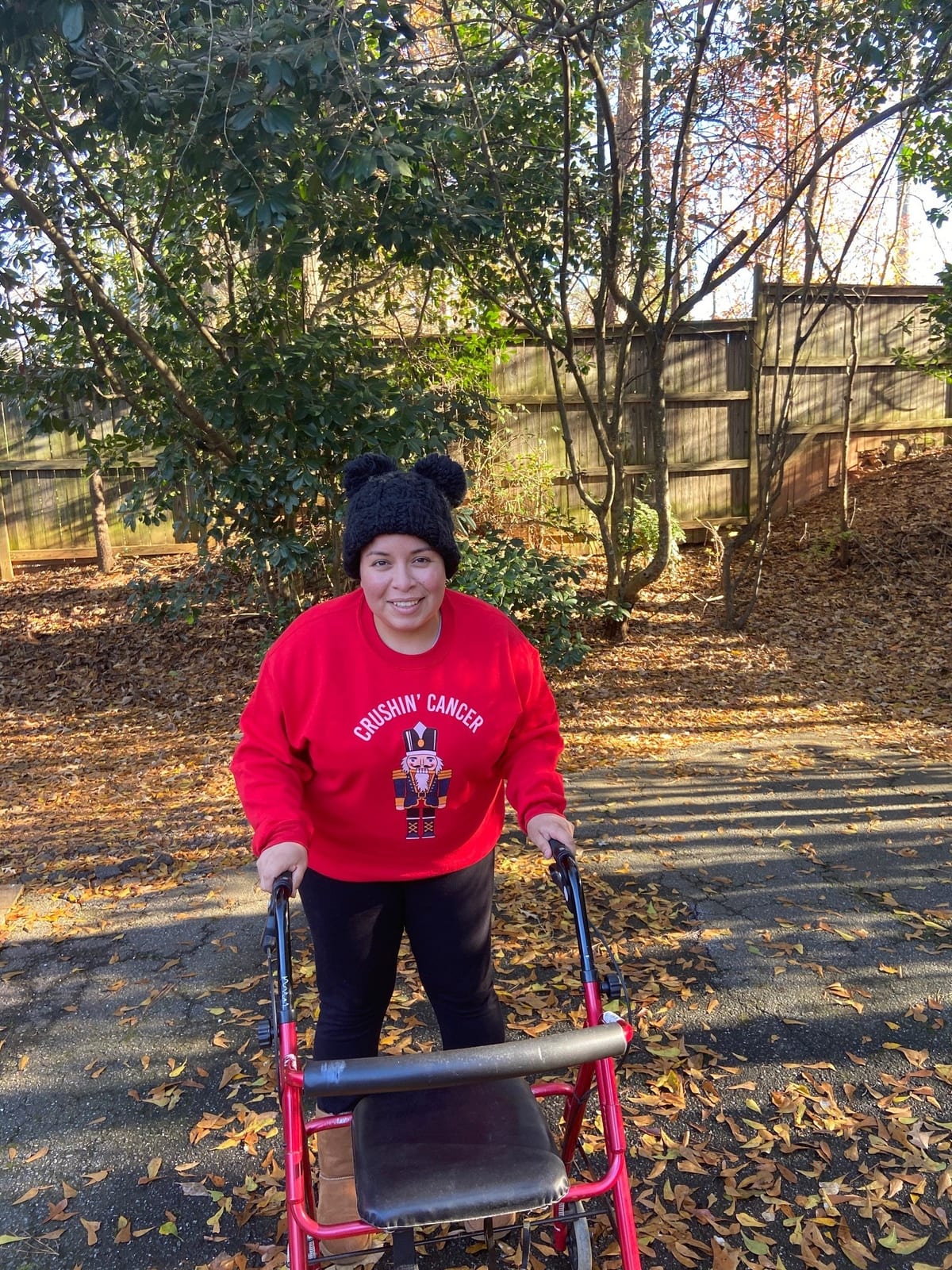
I'm five years out, and I've turned my experience into my life's work. I left my corporate job to work for a nonprofit here in Georgia, The East Georgia Cancer Coalition. We provide free patient navigation services, cancer-prevention education, and screenings—for all kinds of cancer, not just breast.
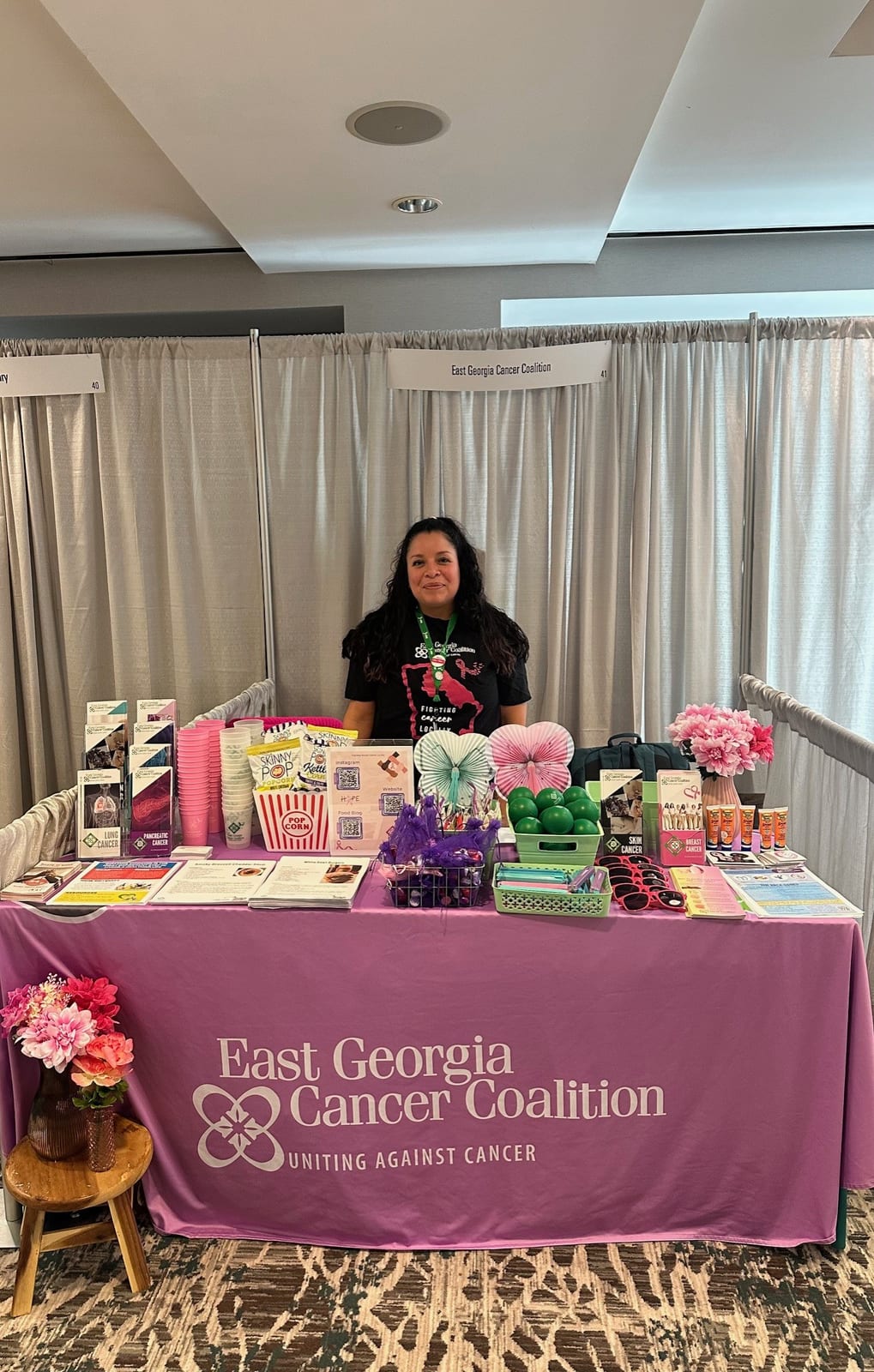
I bring a perspective I don't think many people have, because I've been on so many sides of it. I was a caregiver to my mom, who was uninsured and faced many barriers while trying to get access to care. I was a patient myself, insured and with an incredibly supportive partner.
At the time of my diagnosis, I looked to connect with others who were experiencing something similar. I didn't see many Latinas out there sharing their stories and educating. In my culture—like in a lot of cultures—there's so much we don't talk about. We shouldn't be ashamed of cancer. It's not something we need to hide or whisper about. I want to change that.
My diagnosis was tragic and life-altering, but it's also the reason I'm doing work I love now. We don't get to choose what happens to us, but we do get to choose what we do with our pain—and I want to use mine to help others.
What I'd Do the Same or Differently
I would absolutely still get tested, still take action, and still push my mom and sister to get tested.
What I'd do differently is get additional opinions instead of settling on a surgeon just because I was told they were the "best." I'd give myself more permission to ask questions and advocate for myself. And more than anything, I would find someone to help me navigate it all.
What I Wish I'd Had
At the moment of my diagnosis, I wasn't ready to process everything that was being thrown at me—I was ready after treatment, but by then I felt like I had nobody. I wish I'd had:
- Someone to help me navigate the process, on my own timeline
- Answers to my questions when I was finally ready to ask them
- An in-person community of women in similar situations, so I didn't have to go searching on social media just to feel less alone
- More Latina voices, and more honest conversation about all of this
What I Want You to Know
My biggest piece of advice is to sit with the information first. It's a lot to take in, and the moment you start sharing it, you take on everyone's reactions and emotions. Sometimes you even end up consoling them. If I could go back, I would have tested quietly and given myself time to understand it before telling anyone.
It's also okay to set boundaries. The people who love you mean well, but that doesn't mean they need direct access to every part of your journey.
And please know this: whatever you're carrying, you have the power to choose what you do with it. I chose to use my pain and grief as fuel to continue my work of supporting others facing a cancer diagnosis.
This is one member’s personal experience, not medical advice. Talk with your care team about your own situation.