My Story
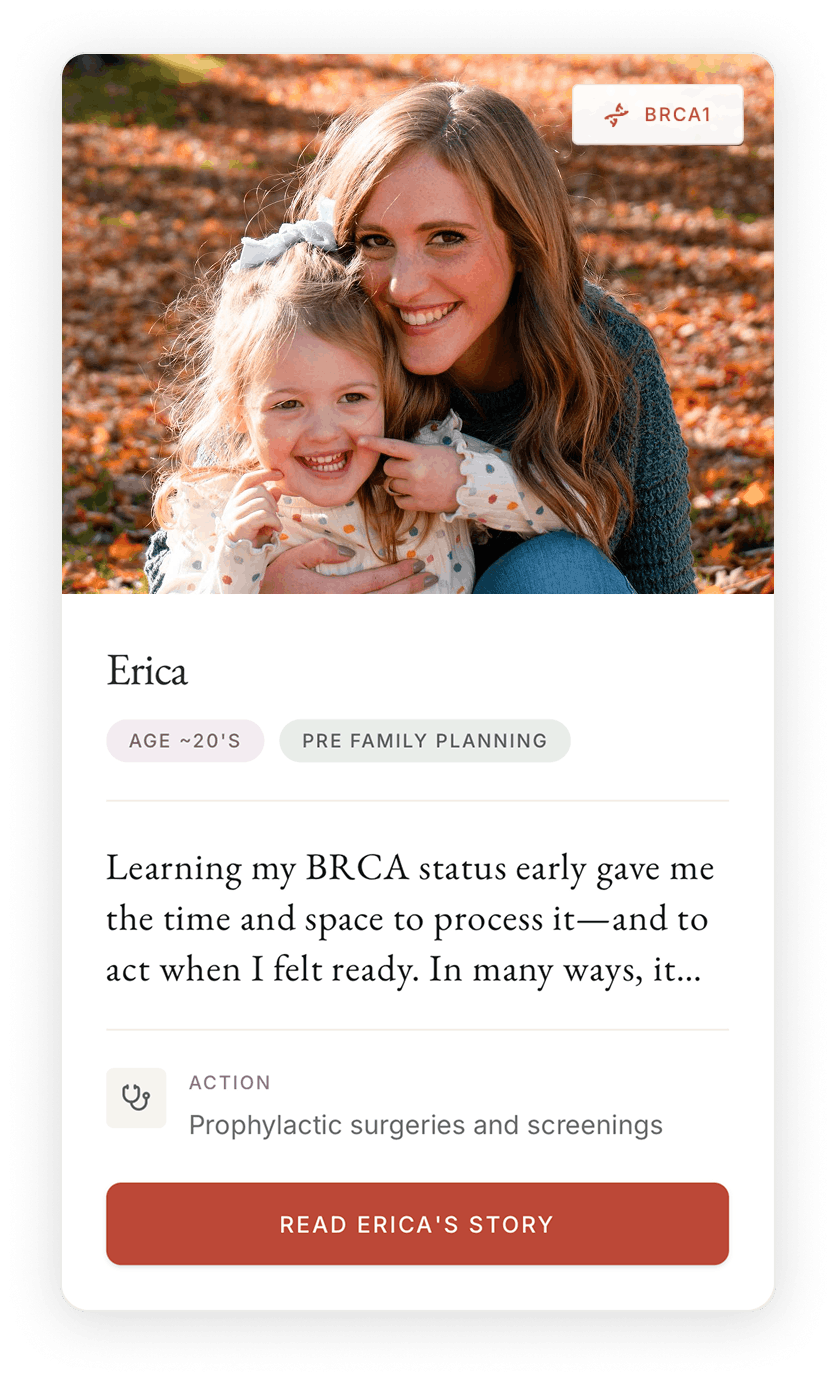
I was a 36-year-old first-time mom to a beautiful 18-month-old when I tested positive for BRCA1. So, I did what I always do: made the list, started making calls, and got to work. As soon as I get information, I need to know everything. Make the decisions, do the things. Mark them off my task list.
I went down every rabbit hole I could find—Google, AI, two BRCA Facebook pages, a DIEP flap group—looking for a story like mine. I kept hitting the same wall: nearly every BRCA1 story I found was someone who had already been diagnosed with cancer. That felt like a completely different world.
They're dealing with a whole other level of chaos and trauma. I would never want to put myself in that same bucket. My path was prophylactic—a choice, not a response to cancer—and I couldn't find anyone telling that story.
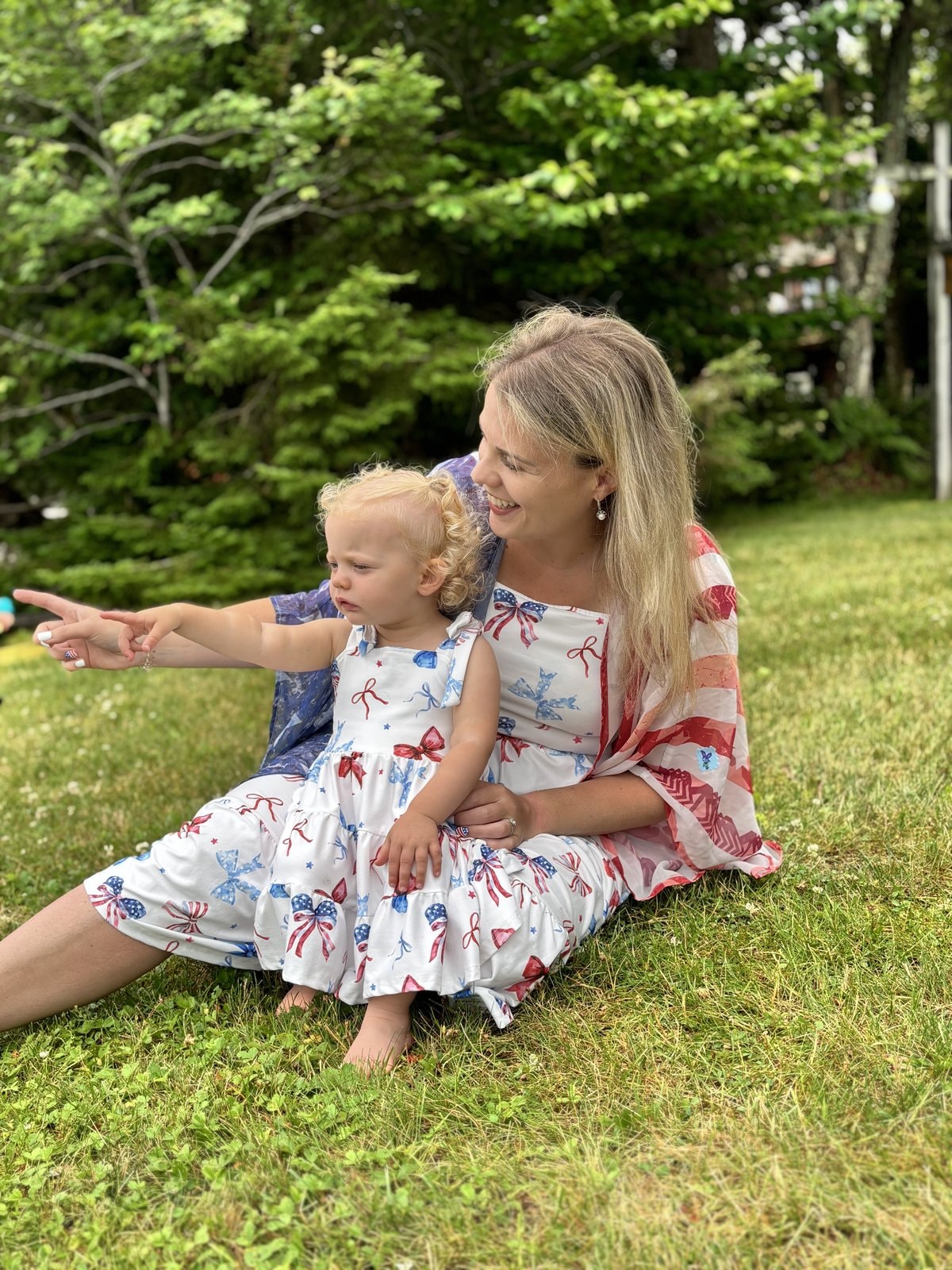
How I Felt When I Found Out
My first move was to call my genetic counselor. Then my OB-GYN. Then everyone in my village—I'd spent time working for the University of Rochester, so I had connections, and I used them. I called for consultations, talked to everyone I could, and within three weeks of my first call, I was scheduled for surgery.
How I Thought About Risk
The prophylactic path felt clear to me—but I was firm about something: my situation was not the same as a cancer diagnosis, and I refused to be lumped into stories that weren't mine.
Even with a healthcare background and a village of medical-professional friends, I still felt overwhelmed trying to figure out the system. And what worried me most wasn't my own navigation—it was everyone else's. I can't imagine someone who's never dealt with the medical system trying to navigate this. And the insurance piece of it all is scary.
The Decisions I Faced
After my appointment with the genetic counselor, I went straight to my OB-GYN and started making consultation calls. My RRSO—ovaries and fallopian tubes removed—happened quickly. I've now completed my prophylactic bilateral mastectomy and have my DIEP flap reconstruction scheduled for later this year.
What I Chose—and Why
I chose to have my RRSO first, and I moved fast. The decision was logical for me. With a BRCA1 mutation and a clear sense of my risk, I didn't see a reason to wait. I immediately feared the possibility of an ovarian cancer diagnosis, as I'm well aware of how detrimental that diagnosis can be. Once I came to terms with being a "one and done" family, it was the logical next step for me.
What Treatment and Recovery Were Really Like
Recovery meant being told to rest—which, for someone with my personality, is its own particular challenge. I was more annoyed that I couldn't do anything. I wanted to vacuum so bad. My husband keeps telling me I'm not allowed.
What I wasn't prepared for was the care gap on the other side. Post-RRSO, I'm on HRT. But no single provider owns my bone density, cardiovascular health, or mood monitoring.
Who makes sure my bone density stays healthy? Who follows up on my mood? I'm still not really positive, to be honest. Even as someone with healthcare experience, I found that gap unsettling. I can't imagine navigating it without that background.
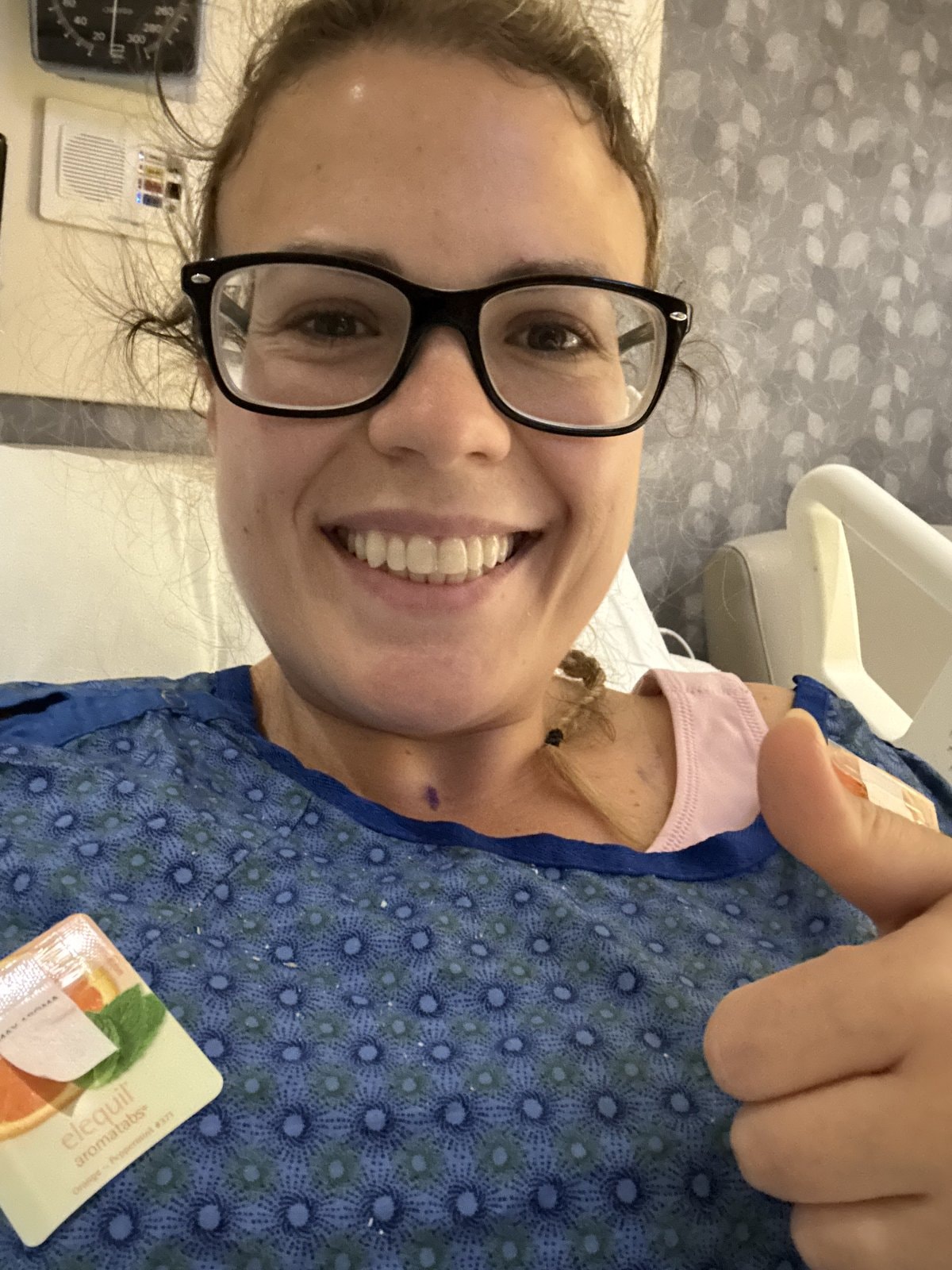
Where I Am Now
I'm post-RRSO and DMX, on HRT at 36, and planning my reconstruction. I'm also already turning my experience into something useful for others—I've been exploring ways to build community and support, whether locally or via Facebook groups.
All I want is to connect with other people going through similar things. What did they do? What's their experience? Who did they see?
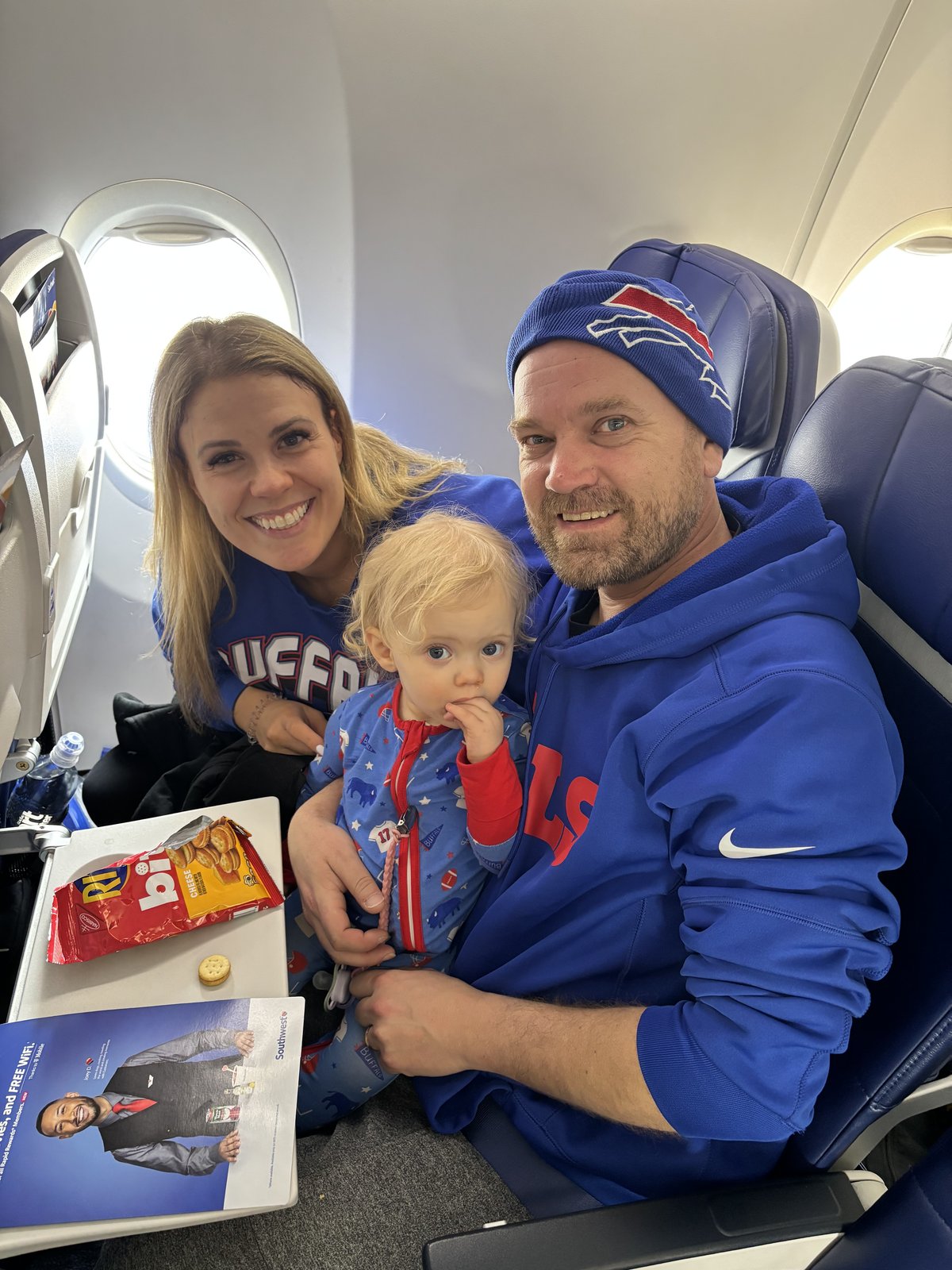
What I'd Do the Same or Differently
I'd move just as fast. Having access to the University of Rochester system and a network of medical-professional friends made a real difference—and I used those connections without hesitation.
What I'd change: clearer guidance from the start on who owns long-term follow-up after RRSO. That gap—the now what? after the acute surgical phase—was something no one walked me through.
What I Wish I'd Had
- Someone else's prophylactic BRCA1 story—not a cancer diagnosis, not a different path, but mine
- A clear answer to "who follows me now?" post-RRSO, for bone density, cardiovascular health, and mood
- A way to find peers going through the same thing and ask: what did you do, who did you see, how did you navigate this?
What I Want You to Know
Cherry-pick the success stories while you're preparing for surgery. Scroll past the complications posts if you need to. Find the stories that say: they did this, they got through it, life kept going.
And if you're looking for community—don't wait for it to exist. I started building it myself because I knew other women would be looking for the same thing. Sometimes the best peer support starts when you decide to become one.
This is one member’s personal experience, not medical advice. Talk with your care team about your own situation.