My Story
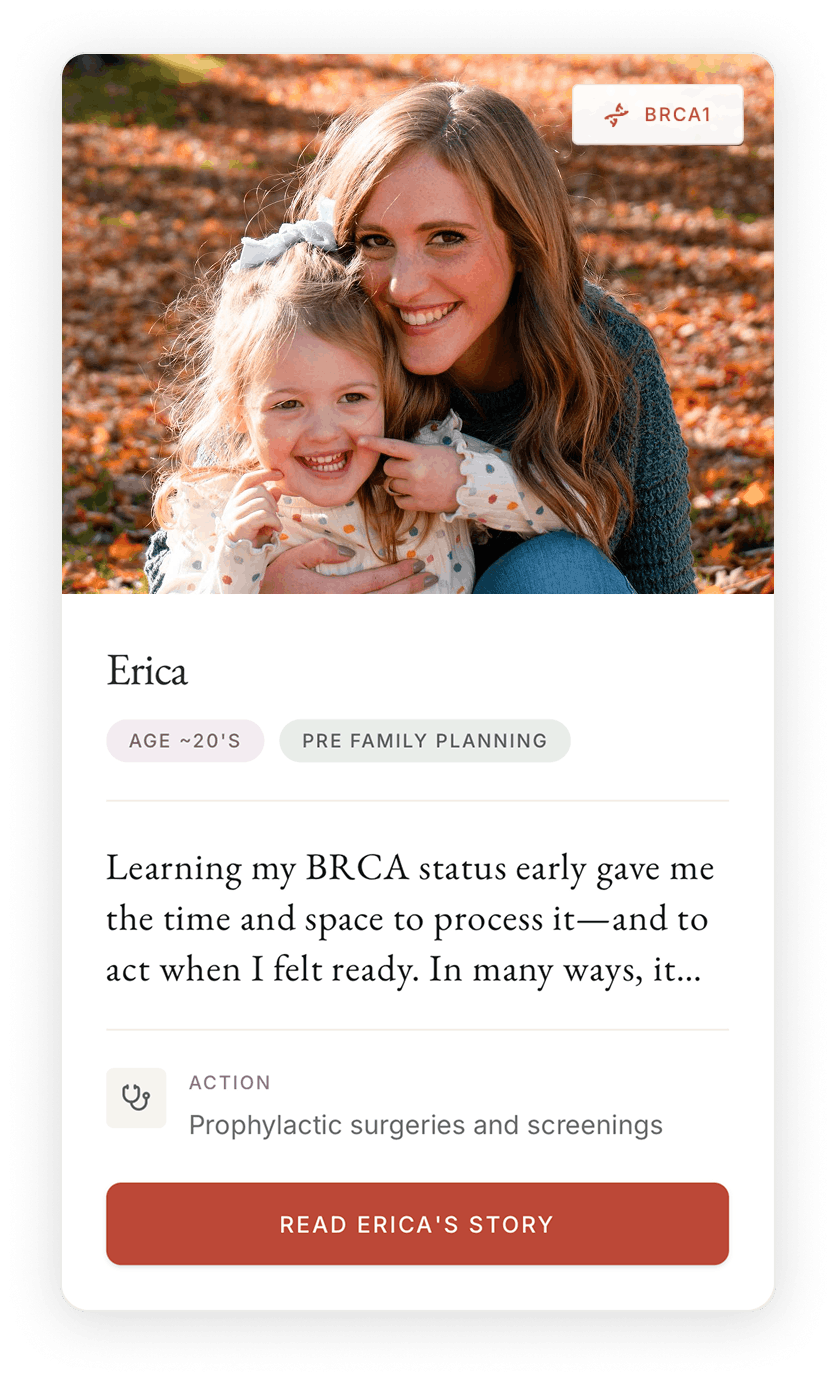
I'm a BRCA2 previvor. I found out I was BRCA-positive in 2013. My mom was diagnosed with breast cancer when I was eight, and there's a lot of cancer in my family, so in some ways it's always been part of my life.
Since I tested positive, I've been in surveillance for over a decade. I haven't done prophylactic surgeries yet—mostly because I was completing my family. I have two kids, who are eight and five. I'm done having children now... and I honestly thought I'd be gung-ho and ready to move forward.
I'm also someone who works in this space professionally, so I have both lived experience and am armed with the research
How I Felt When I Found Out
Even with my family's history of breast cancer, receiving positive genetic test result still changed things. It wasn't just "information." It was a new identity, new decisions, and a new mental load.
Here's the complicated part: While I believe deeply that "information is power," I've also seen how information can create uncertainty. Information can be ambiguous and overwhelming. Sometimes it doesn't calm you down. Sometimes it makes everything feel more complex.
How I Thought About Risk
Over time, I've learned that risk isn't just medical—it's personal and practical. It's a part of our lives; it lives in your relationships, your kids, your work, your bandwidth.
In research, we talk about different stages people go through after receiving positive genetic test results. At first, emotional distress tends to be highest. Then it levels out over time, and you move into the big fork in the road: increased surveillance or prophylactic surgery. This choice is shaped by age, social support, access, family planning desires, and what your life looks like right now.
The Decisions I Faced
My biggest challenge hasn't been a lack of options, for which I'm thankful. It's the burden of carrying everything myself for years.
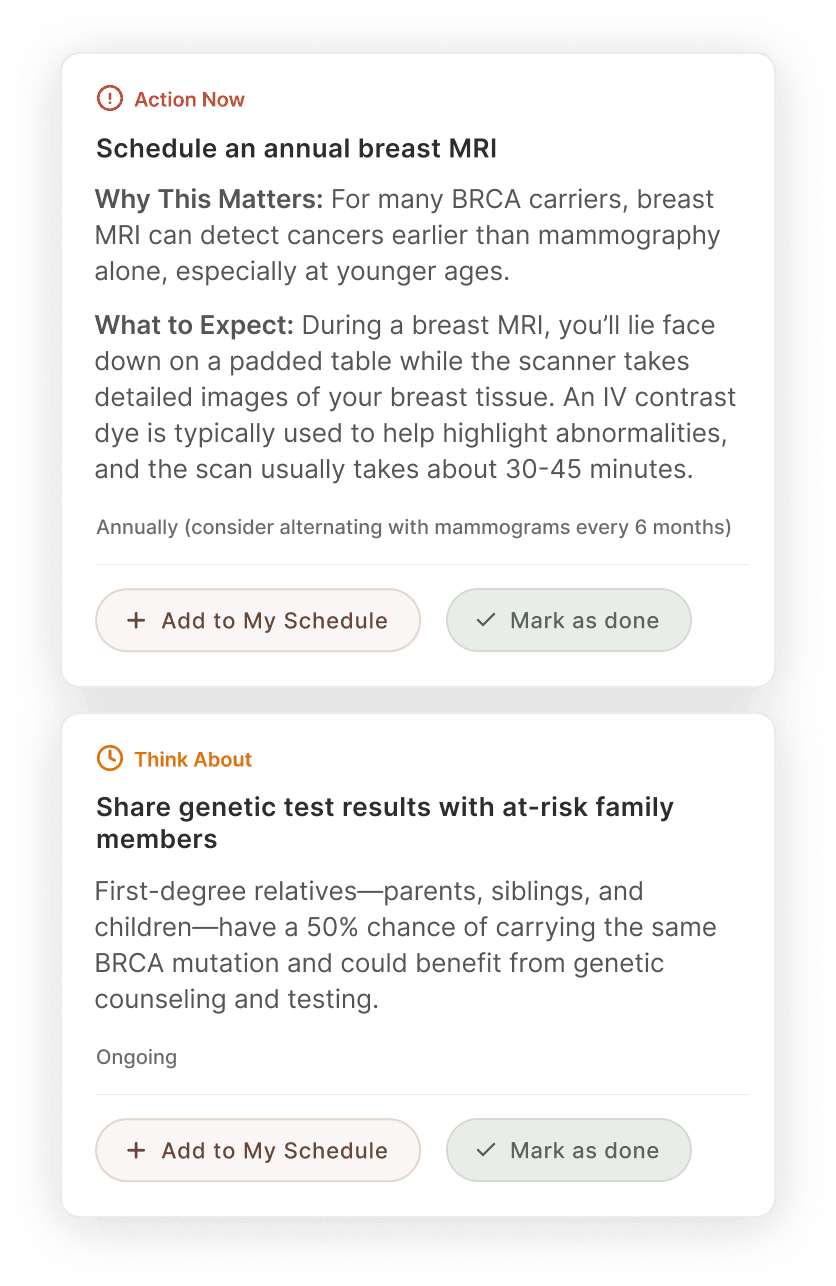
Even though I'm in a high-risk surveillance program, it's still on me to schedule everything: every six months, the MRI, the mammogram, the dermatology appointment. It's all patient-driven. It's easy for things to slip, not because you don't care, but because you're human.
I have also navigated decisions that aren't purely medical:
- How do I build my family knowing there's a chance of passing on my inherited gene mutation to future biological children?
- How do I talk to my family about my inherited gene mutation?
- How do I encourage genetic testing among my family members without being pushy or annoying?
What I Chose—and Why
I chose surveillance while I was building my family. That choice made sense for my life, and I've stuck with it for over a decade.
Now that I'm done having kids, I'm at a new stage. I expected to feel ready to sprint into prophylactic surgery. Instead, I feel... slow. Thoughtful. Sometimes avoidant. Sometimes stuck.
Honestly, I think that's normal. Decisions like this aren't just checkboxes. They touch your body, your identity, your fear, your future—and you don't always move through them on a neat timeline, even if you "know what the research says."
What Treatment and Recovery Were Really Like
I haven't undergone prophylactic surgeries yet, so I can't speak to recovery from that personally.
But I can say what it's been like living in the long middle: years of surveillance, waiting for diagnostic test results, repeated appointments, repeated decisions, repeated moments of "am I doing enough?"
I can also say, as a researcher, the way clinical care and support is delivered matters as much as the content itself. It has to be accessible at the right time, in the right format, without making people jump through hoops.
Where I Am Now
I'm a decade-plus into surveillance, done having children, and still deciding what comes next.
Professionally, I've built interventions and resources that we know help people—things grounded in research, theory, and lived experience. But getting those tools into patients' hands is an uphill battle. Sometimes it feels like we prove what works, only to be unable to implement it in the real world. That gap has been frustrating.
What I'd Do the Same or Differently
I don't regret taking my time while I was building my family. I needed that space.
If I could change anything, I would reduce how much of living with hereditary cancer risks fall on the patient. I want a system that makes it harder to fall through the cracks—especially in that first stretch after receiving positive genetic test results, when emotional distress is high and decisions feel overwhelming.
I also wish more practical "watch-outs" were routinely communicated—like life insurance considerations. It wasn't an issue for me personally, but it's been an issue for others, and people deserve to know what to think about early.
What I Wish I'd Had
I wish I'd had:
- A true one-stop shop (not scattered tabs and dense pages)
- More stories from people who looked like me and lived like me
- Information that was visual and usable—not just text-heavy
- Built-in continuity of care (reminders, scheduling support, fewer things "on me")
- Help with family communication—how to share genetic test results and risks in a clear, supported way
- More support for family planning decisions (including fertility options and how people think about passing on genetic risk)
What I Want You to Know
Stories matter. Data matters. You need both.
Narratives help people feel less alone and imagine a life on the other side. Evidence builds trust and helps you make decisions you can trust.
And if you're someone who's newly diagnosed: the overwhelm is real. It doesn't mean you're doing it wrong. It's a difficult system to navigate, and it's hard to find all the "right" information. The goal isn't to become an expert—it's to feel empowered enough to take one next step at a time.
This is one member’s personal experience, not medical advice. Talk with your care team about your own situation.