My Story
It started with my stomach. I had cramps that kept getting worse, a heaviness, bloating—almost like being five months pregnant. I took a pregnancy test every month thinking there had to be a reason, and every month it was negative. So I did what women do: I chalked it up. Something I ate. Stress. Hormones. Getting close to 40.
Then, on the Fourth of July, I got excruciating stomach pain—the kind I'd only ever felt in contractions. I was keeled over on the couch, couldn't move. It passed, and I thought nothing of it. It happened again a couple of months later.
I was working with a dietitian at the time, just trying to get some baby weight off after my second. One day, she said, almost for fun, "Let's run a GI-MAP." It came back with significant traces of blood. Over the next month and a half, I noticed more and more of it, and we both knew I had to see a gastroenterologist. I still tell her she saved my life.
I went in December of 2022 thinking IBS, maybe diverticulitis—something minor. I woke up from the colonoscopy, and the doctor said, I don't want to alarm you, but that was the biggest polyp I've ever removed. Three days before Christmas, she told me it was cancer.
By the grace of God, everything was removed surgically—no further treatment. I was cancer-free by the middle of February. And one of the tests they'd run along the way was genetic—so right after the best news of my life, I got a call: by the way, you're BRCA2 positive.
How I Felt When I Found Out
I didn't even know what it meant. I'd never heard of any of this—genetic testing wasn't on my radar, like most of us. And the genetic counselor who walked me through it did not give me a good experience. She was listing off body parts I should think about removing, and I was nowhere near ready to hear it. I'd just been told I was cancer-free two weeks earlier.
How I Think About It
Here's what I sit with: I have no family history. By the standards of genetic testing, I never would have qualified. I only found out because of the colon cancer—they tested me almost as an afterthought.
So I look at everything I went through as a blessing, because it's the reason I know. If I hadn't gotten sick, I'd still have no idea I was carrying this.
What I Chose—and Why
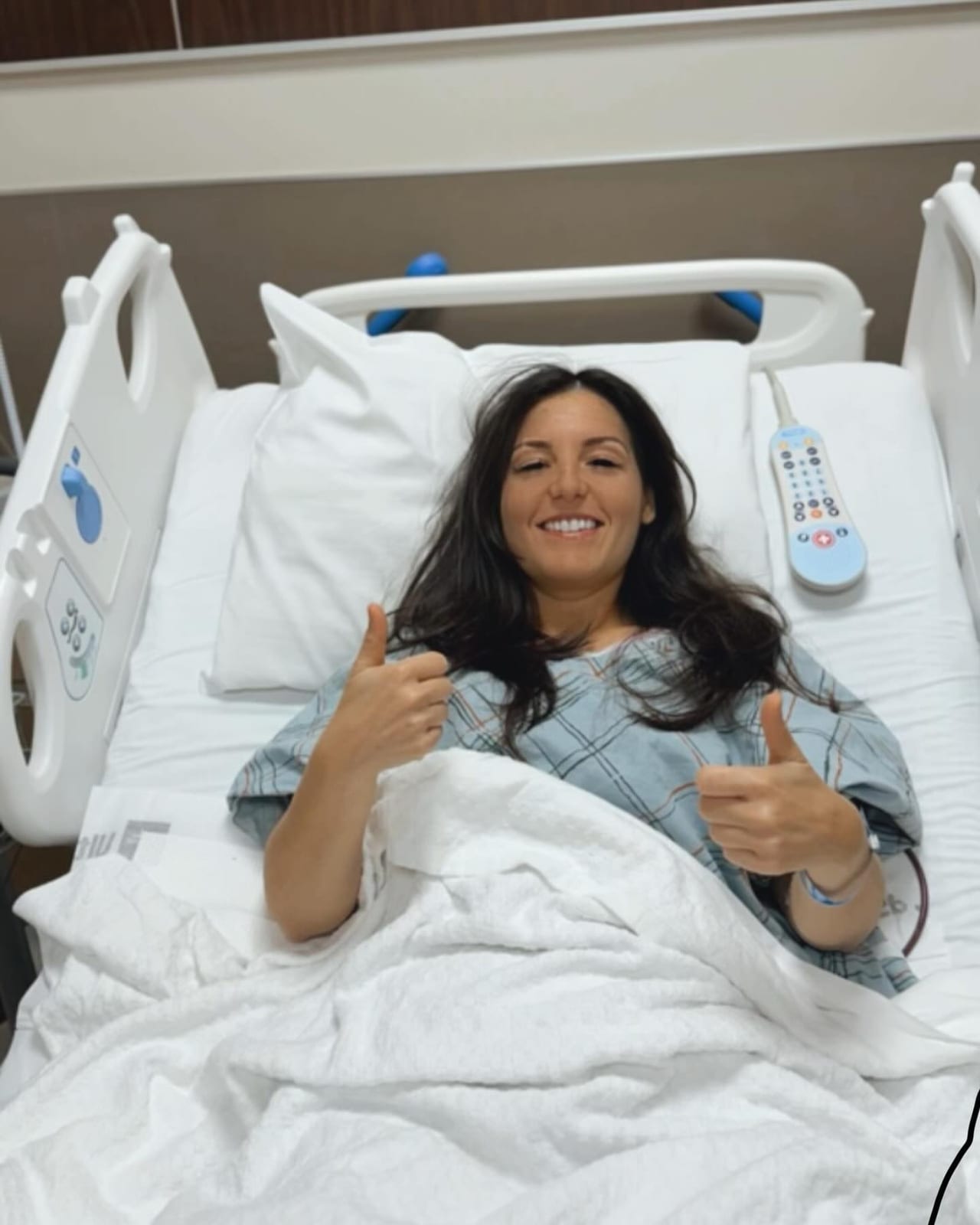
At first I thought everyone making these decisions was insane. Then I did what I do—I went deep: research, studies, benefits, risks. I interviewed a few surgeons before I chose mine.
But the part that actually moved me happened in a waiting room. My son had speech therapy every Monday, and one day they moved us early. A woman came in—no hair, a scarf, a mask, clearly in treatment. She'd been high-risk, going every six months for a mammogram and MRI. She'd had a normal mammogram three months before her diagnosis; her husband found the lump, and even then it was so hard to feel that it took a few minutes to point it out. By the time they caught it, it was stage three. She said, I have a double mastectomy next month. I wish I'd done it ahead of time.
That same day, I had an appointment for my eyebrows, and my waxer—who knew what I was going through—told me her next patient was a woman in her seventies, a four-time breast cancer survivor. She came in, told me her whole story, and lifted her shirt to show me the scars. She'd gone flat. She said, they told me I should take it off in the beginning. I would have.
Message received. Between my own research and those two women in one afternoon, I couldn't take the chance of ending up where they were. That sealed it. I went ahead with the double mastectomy.
What I Wish I'd Had
Literally what MOTA is building. A roadmap. Just something that said, this is what you do next.
You get the result, and you're told "find a surgeon," which is a fine place to start. But after that? I didn't know I was supposed to see a gynecologic oncologist. I didn't know I should be seeing a dermatologist every year. It was a lot of question marks. And if I weren't the type to dig and dig for information, how would I ever have found it?
I've said it from day one: I just wanted someone to hand me a blueprint and say, start here—and do this for the rest of your life.
What I Want You to Know
Take it one day at a time, and be your own advocate. Just because one doctor says something is the right way, if it doesn't feel right to you, you don't have to do it—and you don't have to stay with that doctor.
And it's not a life sentence. So many people hear "genetic mutation" and immediately think cancer is coming for them no matter what. That's not the case. Stay on top of your surveillance, your surgeries, and your timing.
But use your voice—this world of genetic mutations tends to be a quiet, silent one, and we just have to be a little bit louder, whether that's in our own care or in advocacy for all of us as a community.
The Part I Can't Explain
I'd never been under anesthesia in my life, and I was terrified of the colonoscopy. I was sitting on my couch shaking, just saying let me be okay—and a cardinal landed on the fence right outside my window. Cardinals have always meant something to me; in another life, before kids, a cardinal came to me in a meditation, and it stuck.
And then they kept coming. I drove home from bloodwork, and the first GPS direction was to turn right on Cardinal Drive. The surgeon who became my surgeon—I was in her waiting room trying to center myself, and the only picture on the wall was a winter scene, all grays and whites, with a huge cardinal right in the middle of it. I elbowed my husband so hard. Now do you believe me?
Little things like that, the whole way through. I don't think it's a coincidence. I think there's something more than all of this—there has to be.
This is one member’s personal experience, not medical advice. Talk with your care team about your own situation.