My Story
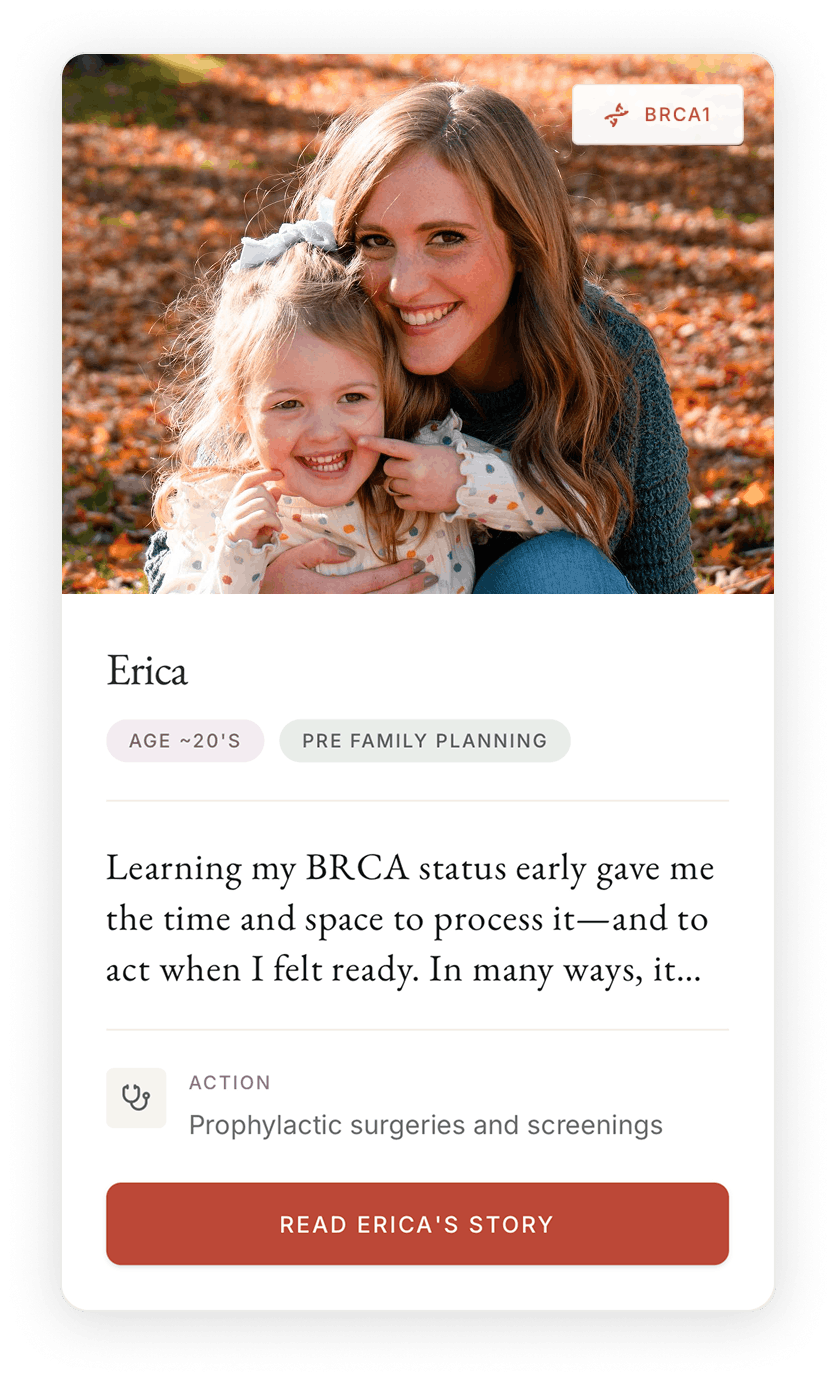
I found out I'm BRCA2 right in the middle of the most intense season of my life. My mom tested positive when she was diagnosed with DCIS—the same summer my baby was born. He came really early, so we'd switched all of our care to give him the best start, and I didn't even have an OB anymore. My own results came back at the end of January. So there I was: a brand-new mom with a seven-month-old, 42 and turning 43, suddenly holding this diagnosis on top of everything else.
I've worked in public health and I'm an over-researcher by nature—I want to understand everything. But this was different.
How I Felt When I Found Out
I was in a really bad place about it at first. Honestly, I just didn't want to do any of it.
The most terrifying part for me is the surgical menopause. I know I'm going to have my tubes and ovaries removed—that part's clear, and because of my age it needs to happen before 45—but the intensity of it, all the layers... that's the thing that scares me.
The Decisions I Faced
And it's not just one decision. Once I started looking, I realized there's this whole menu I didn't even know existed—tubes only, ovaries, some people get a full hysterectomy, mastectomy or not, and then reconstruction: above the muscle, below the muscle, fat grafting. I hate how much research I know is ahead of me. I'm not excited about any of it—I just want to do what I need to do. The thing is, I also can't have more stuff piled on. With a small child and all these future surgeries, I'm already being bombarded with everything I "should" be doing—cancer-fighting diets, 150 minutes of exercise a week, weight training. I can't have more to-dos.
It's hard to get the support I need, because this isn't actually having cancer, and even my own family doesn't think I should have any surgery. So I want more support, but it has to be from people who actually share the feelings and the life stage—someone with a young child, someone who chose intervention.
What I Chose—and Why
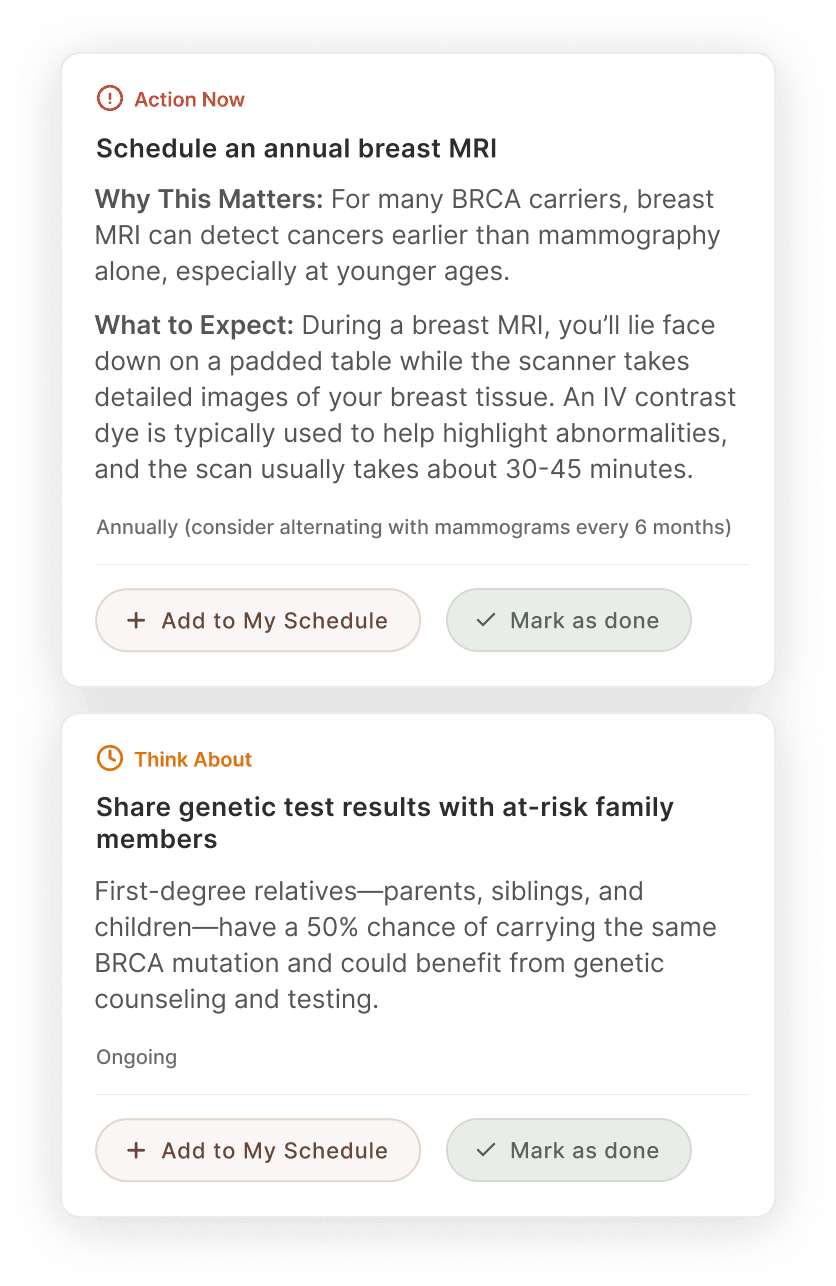
Using MOTA did one concrete thing for me. HRT had been sitting on my list somewhere between "get new tires" and everything else, and it nudged me to realize I should talk to someone about HRT now—not just wait to get a patch slapped on when my ovaries come out. So I actually found an OB and set up an appointment. That already feels like a win.
What I love is that MOTA's roadmap is short. It's only this, and this, and this. When everything else is bombarding me, that simplicity makes it feel okay—like, all right, I can do this. I'd still want a trusted place to go deeper when I'm ready—a link to learn what the real options are, from a reputable source—so I don't end up relying on a Japanese study of twelve people at midnight.
What I Wish I'd Had
I really do like stories. Part of what I was hungry for in the peer support is just someone being real—"this is going to suck, but it'll be okay." And the little things: someone saying, I wish I'd done more upper-back work before surgery, or being honest about how long recovery actually takes. They told my mom ten days, and it took so much longer—they really downplayed it.
There's also a real gap around HRT specifically for people doing these preventative surgeries—everyone's talking about HRT right now, but not how it connects to BRCA and removing your ovaries, or whether there's a special way to do it.
Where I Am Now
I'm in a much better place now than I was. It went from "I don't want to do any of this" to "okay, I just have to do it all"—and honestly, that's a much better place to be.
This is one member’s personal experience, not medical advice. Talk with your care team about your own situation.