My Story
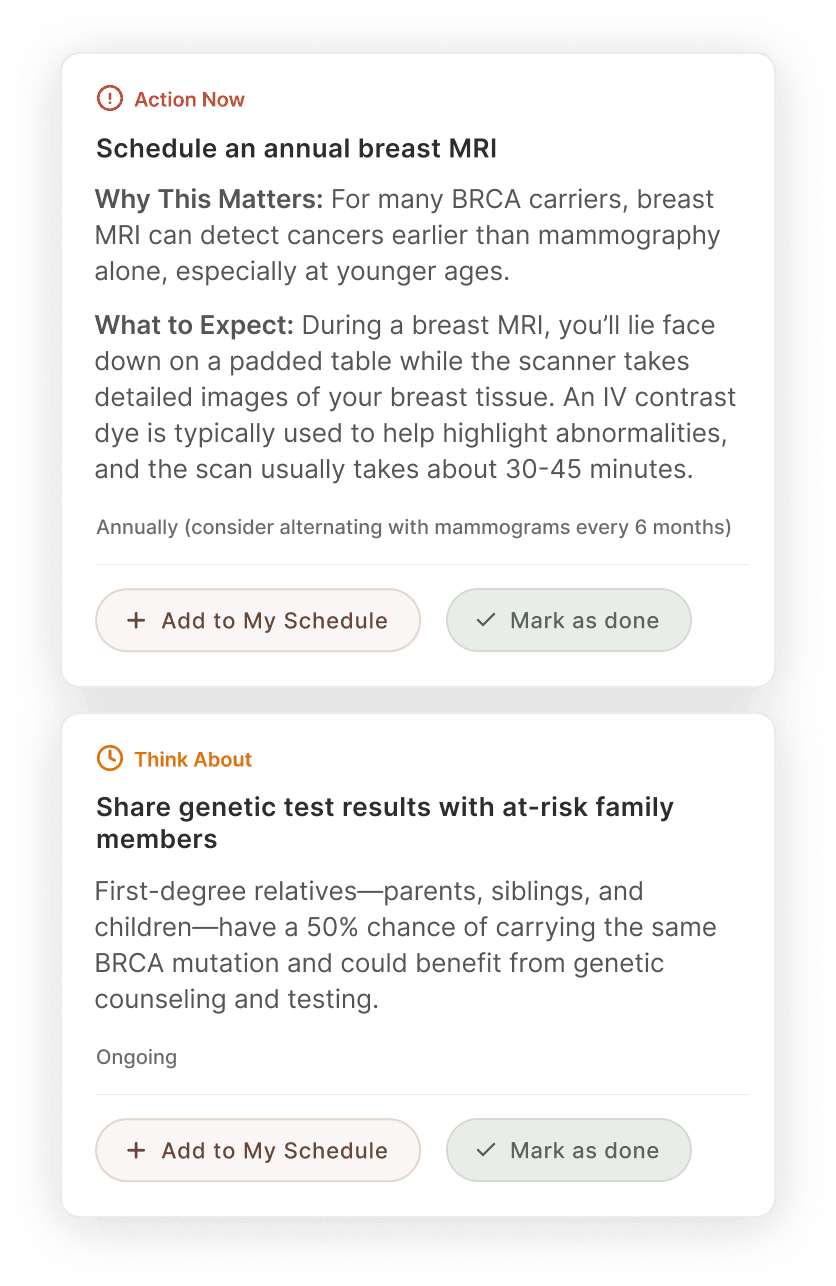
Genetic testing had been recommended to me by my OBGYN for several years given my family history. My mom died of breast cancer at 41. I was five; my little sister was three. Her diagnosis came shortly after my sister was born—she'd been breastfeeding and had to stop. She never knew she had the gene; I don't think the testing was offered to her at that time. My medical team explained that while most breast cancers are not genetic, it was still worth doing genetic testing given my mom's age at diagnosis and the fact that she was adopted, so little of her family history was known. By the time I learned of my own status, I'd already had multiple MRIs and biopsies due to palpable areas of concern on exam. I ultimately didn't get tested until I turned 25 because they explained that it wouldn't really change my management in terms of screening until 25 anyway.
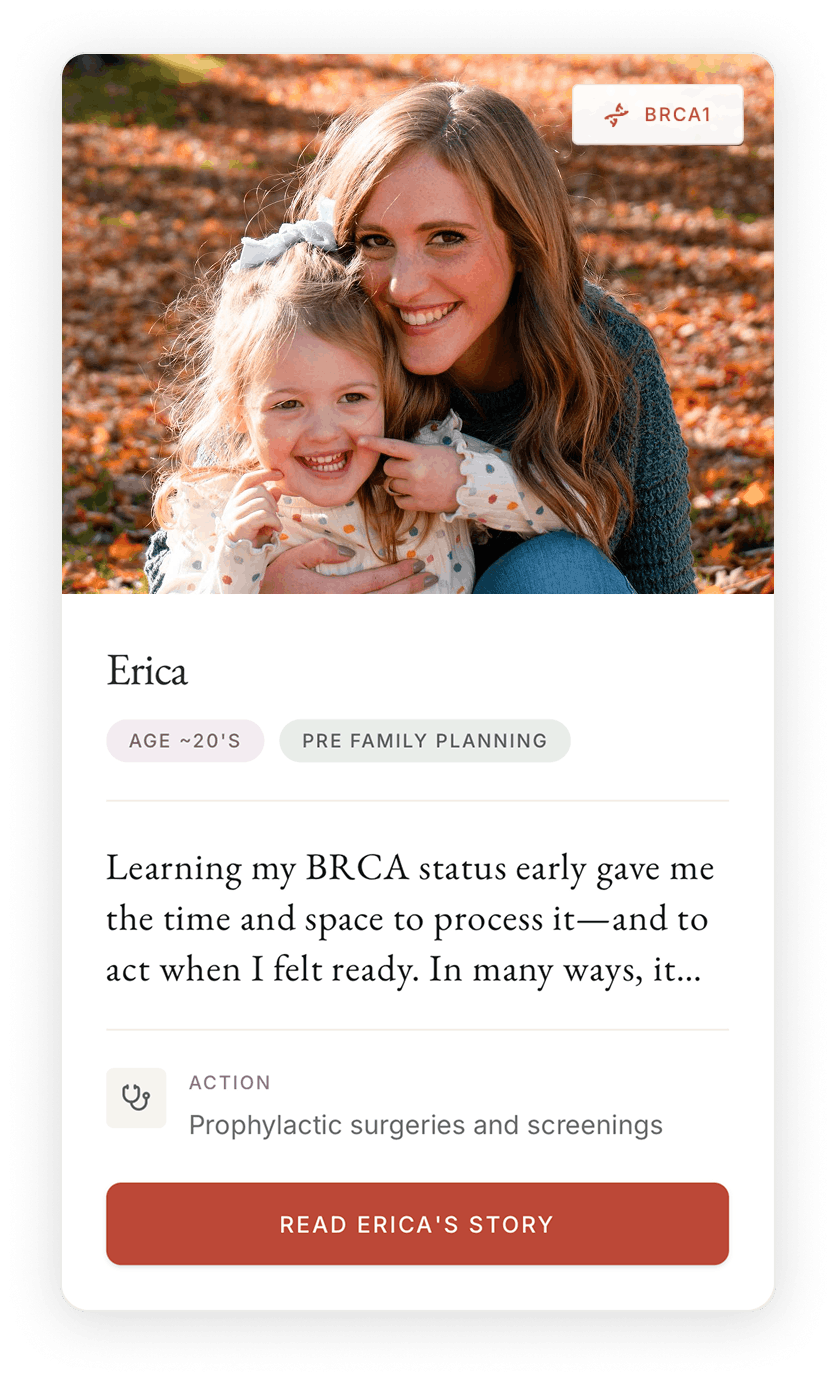
I found out I had BRCA1 in 2024. I actually got the call at work—though luckily the genetic counselor that I established with a couple months prior was the one to share the news with me. It came as a total shock. The pre-test probability of me having it felt relatively low. It felt like we just had to "rule it out" given my family history. I'm a PA and work in the hospital in inpatient medicine, but even with that background I did not know all the nuances of the screening recommendations and surgical options for BRCA1. I simultaneously felt devastated about being BRCA1 positive, and incredibly fortunate to have access to this testing and information. I was seeing a breast care center in addition to the genetic counselor—both were great about walking me through the next steps.
The Decisions I Faced
Originally my plan felt clear cut: I had just turned 26, so I figured I'd eventually have kids first, and then worry about getting surgery done afterwards. This felt like the "cleaner" path to me. It would still give me the option of breastfeeding with an ultimate goal to have risk-reducing surgery when I was done. During one of my appointments, the breast clinic raised the concern that they are seeing breast cancer younger and younger in BRCA1 carriers. They also explained that sometimes a "prophylactic" mastectomy turns out, from the pathology, not to have been prophylactic at all. This conversation really made me rethink my previous thought about waiting until after childbearing. I hadn't even considered a mastectomy prior to childbearing up until this point.
What I Chose—and Why
In making my decision, I thought about my mom's situation. In retrospect, it's a lot harder to get a cancer diagnosis—or worse, be told you have months to live—when you have two kids under five. If someone had a crystal ball and told my mom ten years before she had kids, "you can either risk getting cancer and ultimately dying, or have a mastectomy and significantly reduce your risk," I imagine she would have proceeded with the mastectomy. My calculated lifetime risk of breast cancer came out to around 88%, and it felt absurd to think I would be in the 12% that doesn't get it, especially given that I had already had biopsies. Screening started to feel like I was just waiting to find something. So as crazy as it had once seemed to do this before kids, I realized I really couldn't afford not to.
The other piece: once you actually have a cancer diagnosis, chemo and radiation can take certain reconstruction options off the table or change the healing process and cosmetic outcomes. Not to mention all of the side effects people deal with while on chemo and radiation. To have the most control, I felt my best bet was to do it before all of that.
I didn't even know DIEP flaps were an option until I went to the plastic surgeon. The maintenance of implants worried me—I'm in my late twenties, what if I needed an exchange roughly every ten years for the rest of my life? I kept thinking about what my surgical risk would look like as I aged—what if I developed other chronic medical conditions that made these exchange surgeries riskier? The DIEP flap reconstruction felt like an investment up front—the time, the recovery, the restrictions—but I'm the youngest I'll ever be right now, and figured I'll heal best now. The scars with the DIEP flap were daunting. It felt like such a superficial concern and ultimately didn't hold me back from pursuing it but weighed on me nonetheless. Equally unsettling to me was how difficult it was to find post-op pictures of this reconstruction in people of my age group. I also worry about the tightness in the abdomen in the future with pregnancy, but it feels like a small price to pay to drastically reduce breast cancer risk. None of the options felt "perfect," but I reminded myself of how fortunate I was to even have the ability to choose.
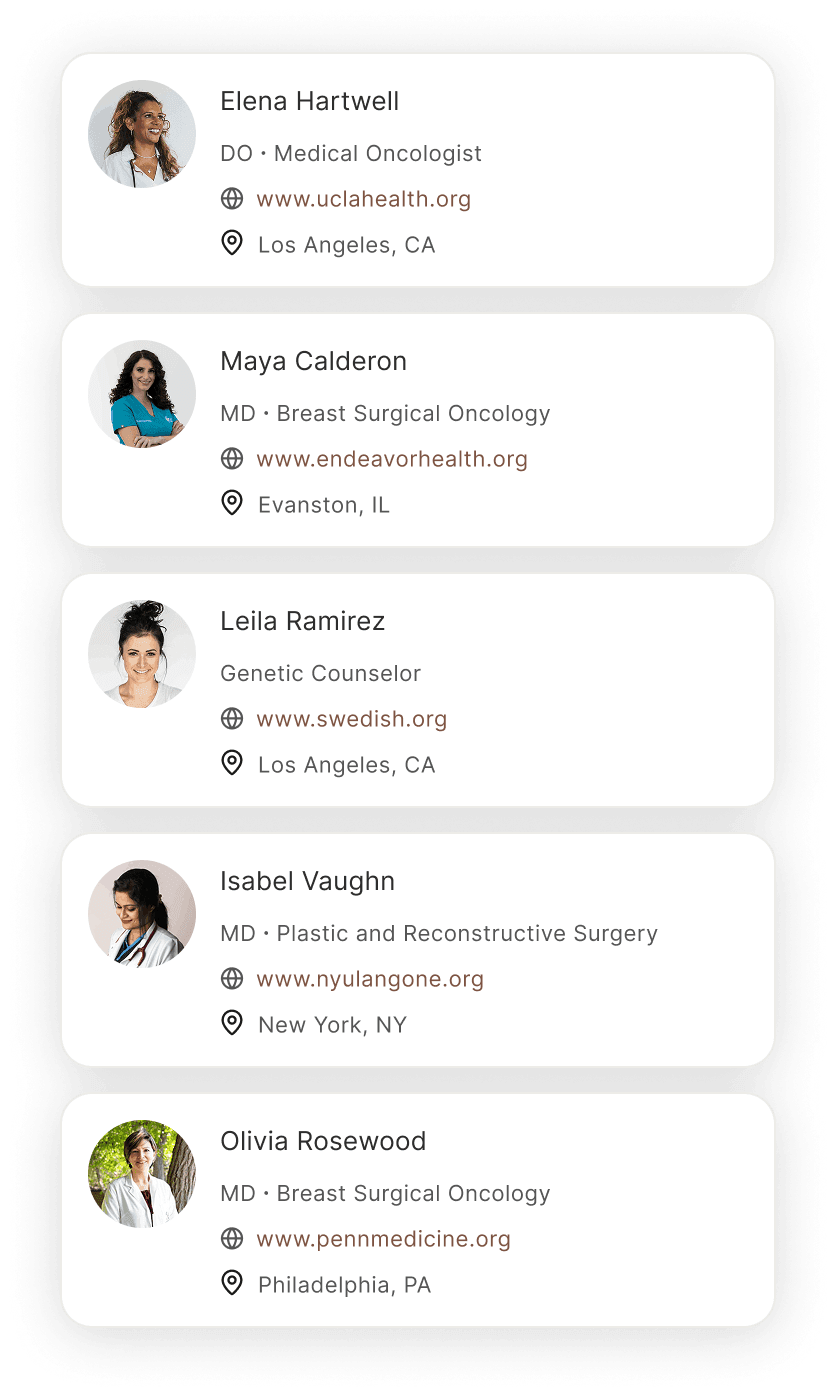
My plastic surgeon, Dr. Berlin at Brigham, was fantastic. From the moment I met him for the first time in the office, it struck me that he immediately understood the context of BRCA and how difficult these choices are. He acknowledged how challenging it is and how scary it feels. He carefully explained each option to me and was so patient. It was so comforting to have him as part of my care team.
Where I Am Now
So far I'm really happy with the DIEP. I had it about six weeks ago. I still have to think about whether to pursue IVF to select against BRCA1 in future children, and think about my ovarian and pancreatic cancer risk management and screening. I get yearly skin checks given the increased risk of melanoma.
What I Wish I'd Had
At diagnosis, I wish I'd had a one-pager—some broad trajectory or diagram. I know it's individualized, but something like: for the breast risk, here's the every-six-months screening branch versus the mastectomy branch, then a sub-branch around all of the reconstruction options; around 35 think about the ovaries; skin screening; pancreatic down the line. My genetic counselor actually did a great job giving me that broad view over the phone when she shared my results—but not everyone gets that, and I was fortunate to have a healthcare background and be able to follow the terminology. Many people have never heard of BRCA, never mind less common mutations including ATM or PTEN. This onslaught of information was overwhelming to me even with my background—I can only imagine how much more overwhelming it would be if the terms were unfamiliar on top of it.
But the biggest thing? I've had such a hard time finding people in my exact situation—under 30, undergoing the prophylactic mastectomy before kids. It gets even harder if you try to narrow this down to people who pursued DIEP reconstruction or people in your area. Some people find out about the gene after they've had kids and therefore do surgery after; learning from people in this situation has been super helpful to me, but their experience is just different. I asked my plastic surgeon if they had any kind of patient-connection program—someone two steps ahead of me, or someone coming in behind me I could help—and they didn't really have that. Before surgery, I really just wanted to be able to talk to another thirty-ish-year-old person who had had a DIEP and is living their life, and just seems okay. I think it would have been really reassuring to have that, especially when you're getting ready for surgery. My plastics team was incredible but sometimes it's helpful to just hear about the lived experience of someone else in your situation. I've since been fortunate to talk to others through FORCE, NBCF, and the Breasties app but it felt really hard to find others in the beginning.
This is one member’s personal experience, not medical advice. Talk with your care team about your own situation.