My Story
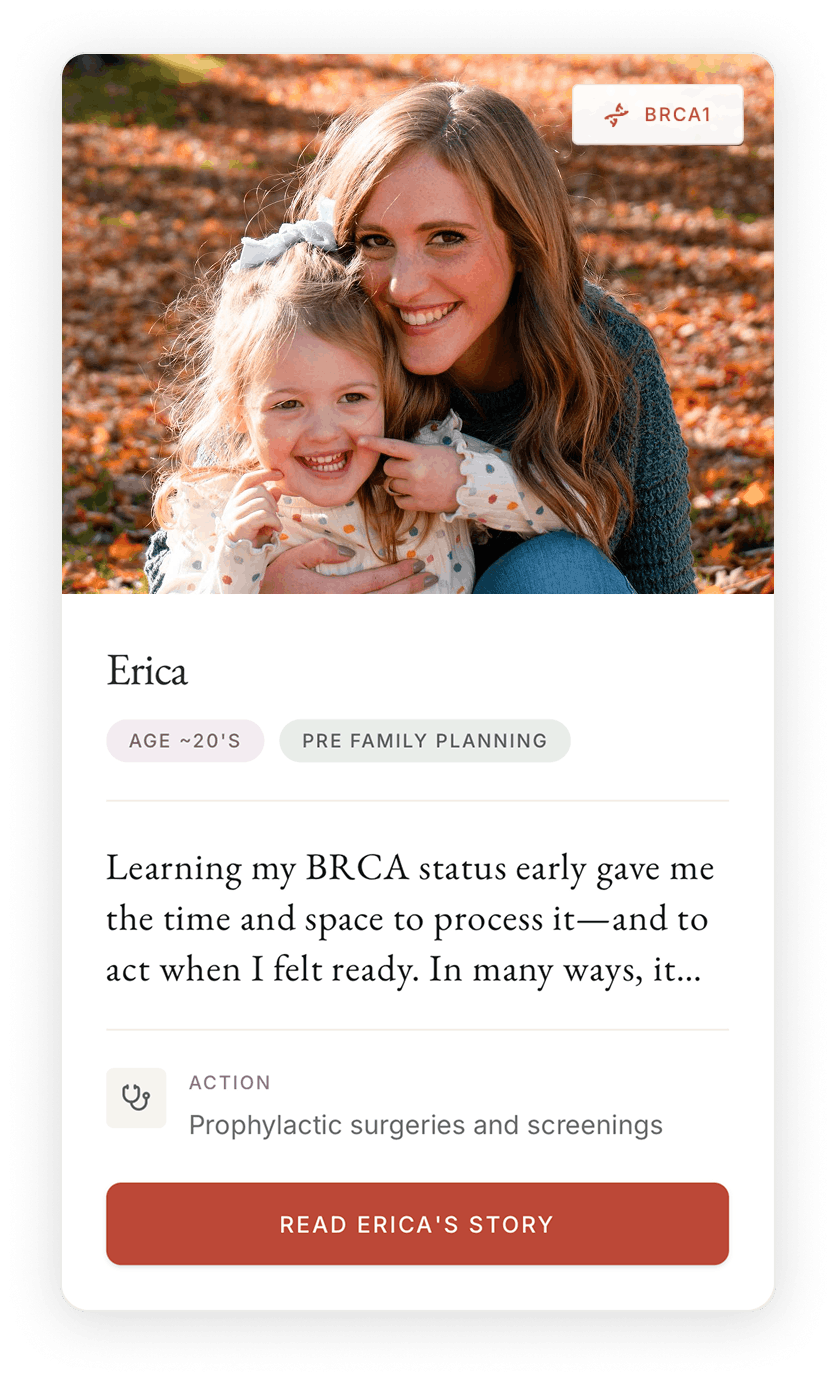
I found out I was BRCA-positive through my family. My maternal aunt was diagnosed with triple-negative breast cancer, so her doctors had her get genetic testing. When she found out she was positive, my mom tested and came back positive, and that's what prompted my sister and me to get tested too—we both came back positive. I got my genetic testing through my primary care, and as soon as the result came back, they referred me straight to a genetic counselor. I got really lucky with that part. A lot of people don't get that—which means their doctors often don't even know to make the referral.
I'm in New Mexico, and everything for me ran through the University of New Mexico hospital system. My genetic counselor didn't really have outside doctors to point me to—I just got automatically referred to specialists within the system. With our family history of breast cancer (we don't have a history of ovarian), that shaped the path I was put on.
The Decisions I Faced
I knew immediately I wanted a prophylactic double mastectomy to lower my risk, but that didn't mean I didn't grieve. Even though I was sure of my decision, it was still a really hard one to make. Where it got really complicated, though, was hormones after my hysterectomy/oophorectomy surgery. The gynecology department was giving me what felt like very outdated information about hormone therapy. I wanted a full hysterectomy, and they pushed back, telling me it wasn't medically indicated. I felt like I wasn't being listened to.
I found a different doctor, and she has been incredible. Before I even stepped into the room, she already knew my history. She basically said, "I know you have all the information, so where are you in the process? What do you want to know specifically from me?" When I told her I wanted a full hysterectomy, she asked me why. I listed my reasons; she looked back through my history and said she didn't see any reason it wasn't right for me. After everything I had been through, that felt like night and day.
The HRT piece has still been a challenge, even with my new doctor. Her specialty is oncology, and while she 100% supported my decision to use HRT after surgery and she was open to starting me on HRT, she wouldn't be the doctor I followed up with regarding hormones. I had to find my own menopause specialist and had to do the coordinating between doctors myself because they were parts of different hospital systems.
How I Felt When I Found Out
Here's the thing: I didn't have cancer. Yet I was facing major health decisions and surgeries. I felt like I was in no man's land. I was no longer like my friends and most of my family, but I also wasn't able to connect with people who had experienced cancer. So much of this is just "this is what you do"—next step, next step—and you're expected to keep moving without anyone acknowledging that you're not sick, but you're not exactly in the clear either, and for me, mentally, I wasn't okay. That in-between is its own very real thing, and I mostly had to find the words for it on my own. Even though I had three family members going through it with me, we all had very different thoughts and emotions about it, so I still felt alone in my journey.
What I Wish I'd Had
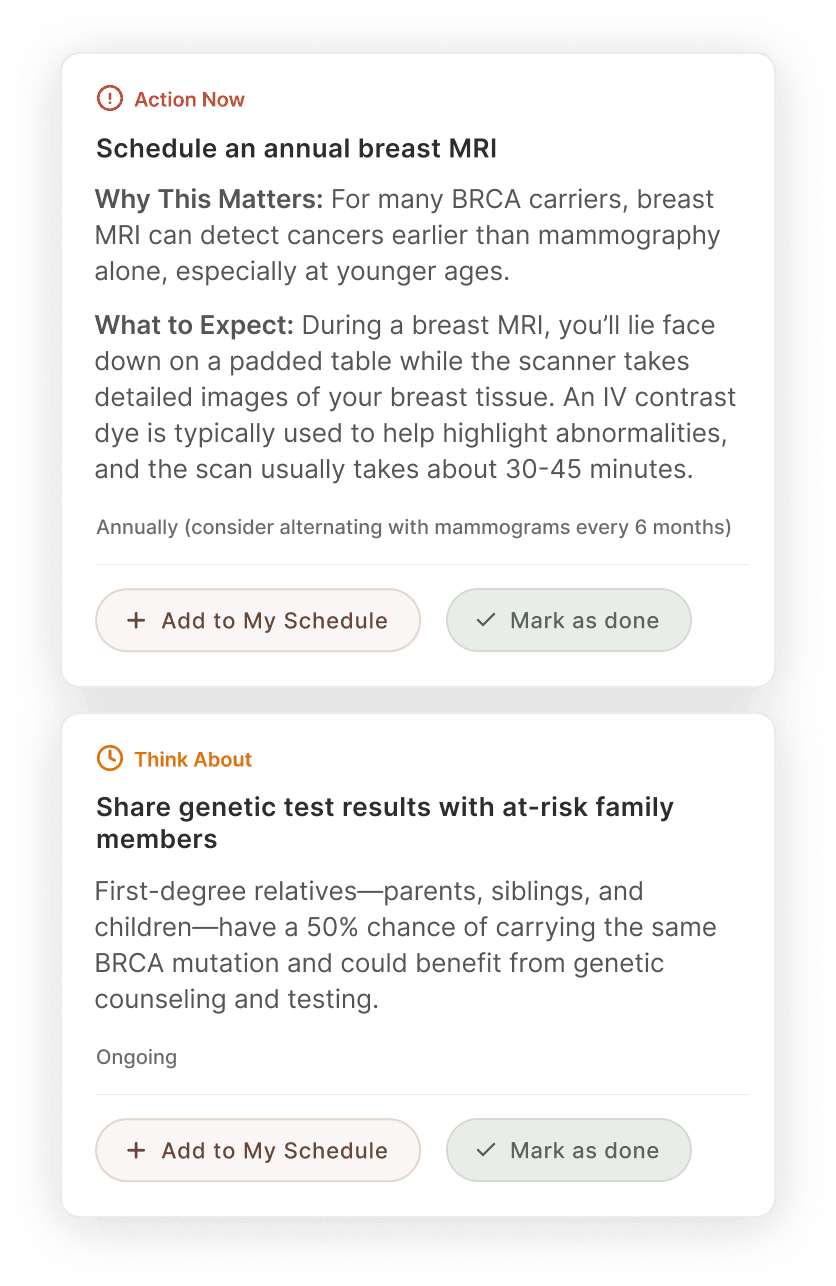
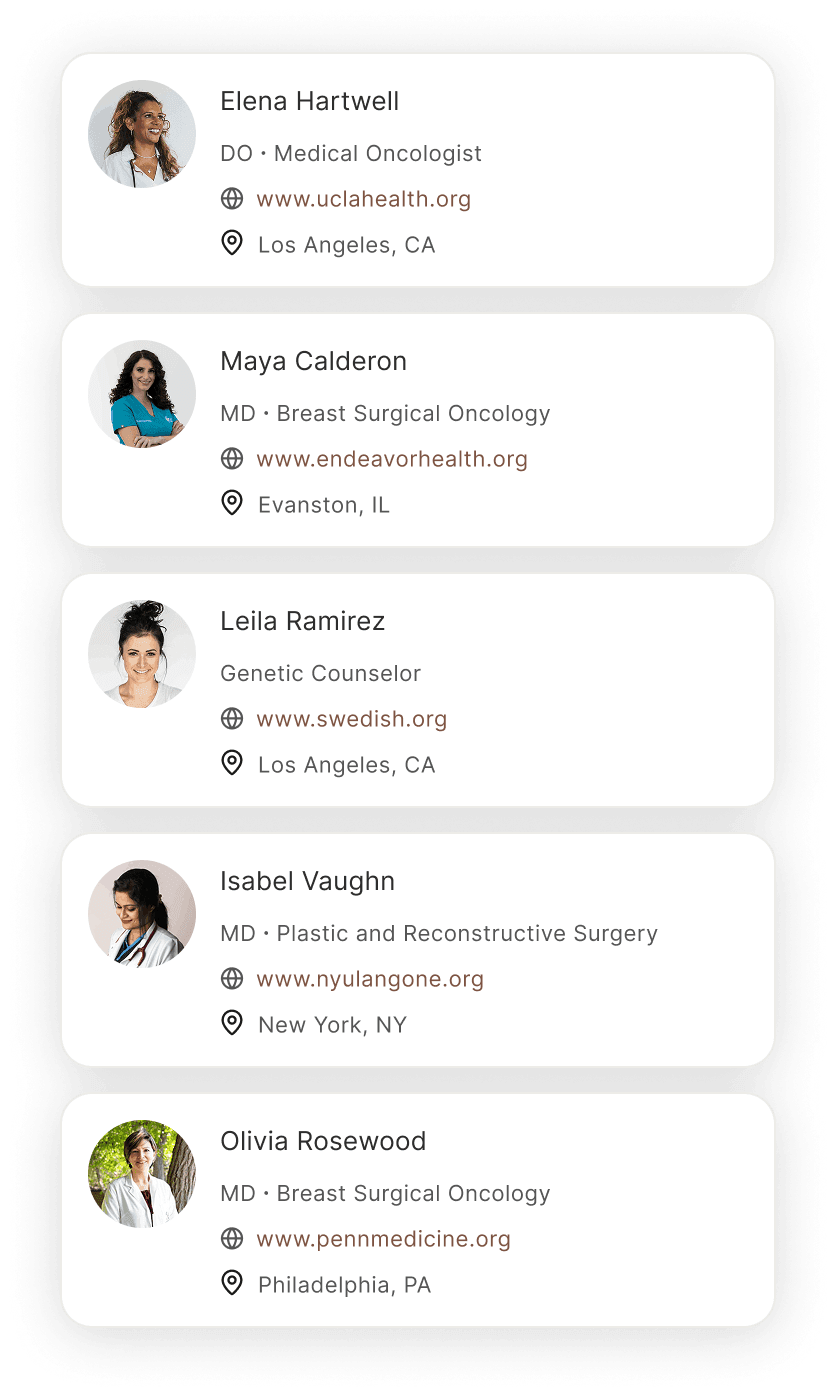
I wish someone had given me a comprehensive list of all the types of doctors I should see. For example, should I see a gynecological oncologist, or would a general gynecologist be sufficient? When I was already overwhelmed, doing research to figure out my new medical needs was very stressful. I would have loved having a living to-do list so I could add things, check them off, and go back and ask myself, "Did I talk about this? Did I fully address X, Y, and Z?"
What I Want You to Know
I'm taking it one day at a time. I try not to get too far ahead of myself. I have two daughters who are too young to be tested yet, so we have no idea where they'll land. I would drive myself crazy thinking too far into the future. Take it one day at a time!
Also, be your own best advocate! If you don't feel comfortable with the advice a doctor is giving you, get a second opinion. If you feel like you aren't being listened to by your medical team, find a different one. You deserve to be with a team that supports your goals as you navigate BRCA.

This is one member’s personal experience, not medical advice. Talk with your care team about your own situation.